Fr. Gerrer’s Artistic Beginnings
- MGMoA

- Jul 17
- 2 min read
by Delaynna Trim, Mabee-Gerrer Museum of Art Curator
Did you know that Fr. Gerrer was born 158 years ago this month? He was born on July 23, 1867, in the village of Lautenbach, Alsace, France. This area is known for small farms and vineyards. The Alsace Loraine area of France has gone back and forth between France and Germany over the centuries. France controlled the area in the 17th and 18th centuries with Germany taking control from 1871-1918. After WWI, the area was returned to France. In fact, Fr. Gerrer’s family left their home and came to the US because of the fighting in the area during the Franco-Prussian War.
The family initially settled in St. Joseph, Missouri, but soon moved to Bedford, Iowa. In Iowa, his father was a baker as he had been in France. He taught Fr. Gerrer how to bake. This would be a helpful skill when Fr. Gerrer later joined the monastery.
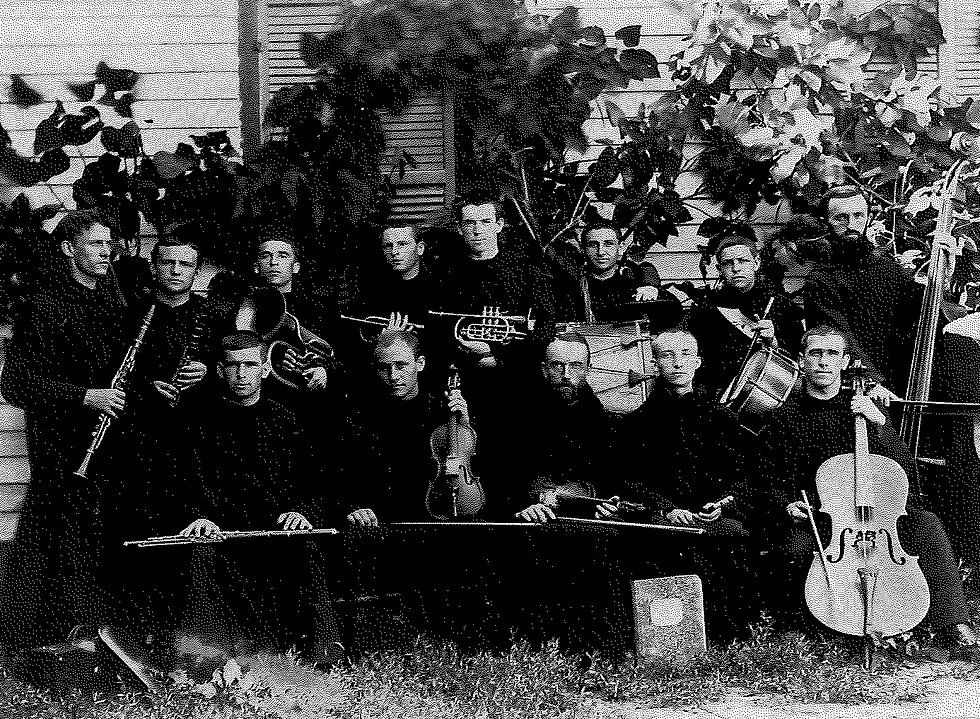
Did you know that Fr. Gerrer played the guitar and clarinet? Fr. Gerrer taught himself to play guitar when he and his older brother, Albert, travelled to Portland, Oregon, and ended up working on a mail ship off the West Coast. When he returned a year later, Fr. Gerrer started taking clarinet lessons from Patrick Gilmore who was a well-known composer and military band leader. Fr. Gerrer played the clarinet in several bands including the Fifth Regiment Band of the Iowa National Guard, and with the Hurlbert & Leftwich Circus. During his time with the circus, he played the clarinet while riding a horse which then jumped over other horses! He continued playing clarinet when he joined the Sacred Heart Mission/St. Gregory’s Abbey in 1891. He joined an organist and a violinist to create a small band. Eventually, there were 14 monks and students in this band.
While Fr. Gerrer had sketched since he was a boy, it wasn’t until the Abbot Felix De Grasse sent him to Italy to get trained in 1900 that he had any formal, artistic training. He studied under several talented Italian painters – Guiseppe Gonnella, Ciro Galliazzi, Salvatore Nobili, and Antonio Ortiz Echagüe.

Fr. Gerrer enjoyed painting en plein air, which means that he would paint outside. These tend to be smaller, quicker paintings. Often, they would be preparatory pieces for larger works. He would paint en plein air pieces as he travelled around the world. Many of his en plain air pieces are from right here in Oklahoma. He would often paint in the Wichita Mountains and other scenic areas of Oklahoma.
For outdoor-related art projects, check out https://www.mgmoa.org/art-projects/
Flower Pounding
Supplies: fresh flowers, fabric, hammer/rubber mallet,
Place your flower (the side you want on the fabric up) on a hard surface, then cover with your fabric. Cover with a piece of cardboard and hammer. You might have to check to see if the flower has been fully transferred. If not, continue hammering.
Remove the cardboard and peel the flower off the fabric to reveal the transferred colors.
Repeat until you have the image that you want.


Comments